Technical Articles

An authoritative guide based on ICAO (International Civil Aviation Organization) and CAAC (Civil Aviation Administration of China) standards
Definition
What is an aviation obstruction light?
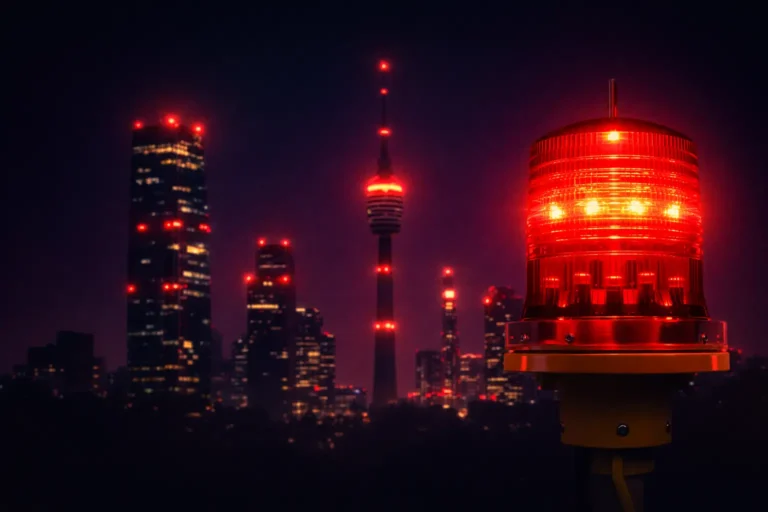
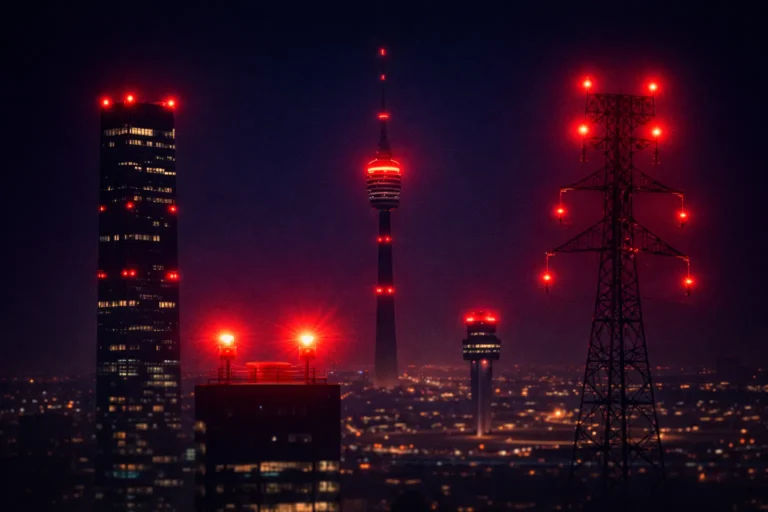
An aviation obstruction light is a mandatory safety marking light installed on tall structures and facilities in accordance with ICAO Annex 14 — Aerodromes and the Chinese civil aviation standard MH/T 6012. Its primary purpose is to provide a visual warning to aircraft in flight under low-visibility or nighttime conditions, preventing potential collisions with structures.
Under Chinese civil aviation regulations, any structure or facility rising 45 metres or more above ground or water level must be equipped with aviation obstruction lights installed and maintained in accordance with the applicable standards.
Important: The requirement to install obstruction lights depends not only on the absolute height of the structure, but also on its position relative to the obstacle limitation surfaces of nearby airports. Always consult the local civil aviation authority for a binding determination.
ICAO Classification
Three intensity categories of aviation obstruction lights
ICAO Annex 14 classifies aviation obstruction lights into three intensity levels. Each level has specific requirements for applicable scenarios, colour, and technical parameters:
Low intensity
Used on structures below 45 m that still pose a risk to low-flying aircraft. Fixed steady red light, minimum luminous intensity of 10 cd (Type A) or 32 cd (Type B). Typically applied to rooftop markers, antenna bases, etc.
Medium intensity
Used on structures between 45 m and 150 m. Two sub-types:
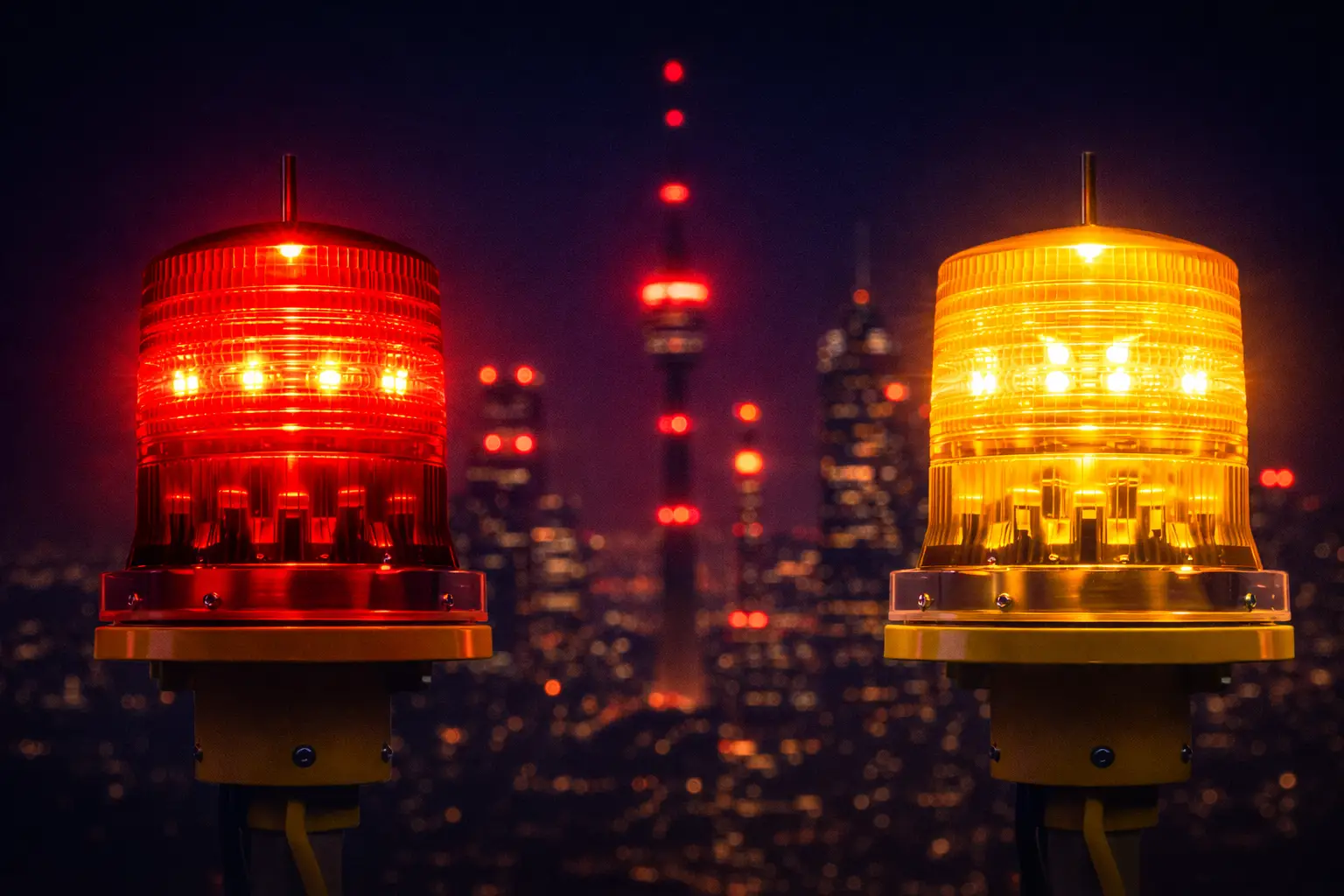
· Type A: White flashing, effective intensity ≥ 20,000 cd, flash rate 20–60 flashes/min
· Type B: Red flashing, effective intensity ≥ 1,600 cd, flash rate 20–60 flashes/min
High intensity
Mandatory for structures exceeding 150 m. Must use white flashing lights at 40–60 flashes/min. Effective intensity is adjusted across three ambient brightness levels:
· Daytime: ≥ 200,000 cd
· Dusk / dawn: ≥ 20,000 cd
· Night: ≥ 2,000 cd
Colour rule: ICAO requires white high-intensity lights above 150 m. Red medium-intensity Type B lights are permitted between 90 m and 150 m. While white lights offer superior conspicuity, they produce more light pollution for surrounding residents — a trade-off that must be carefully considered.
Technical Specifications
Key technical parameters at a glance
| Parameter | Requirement (ICAO / CAAC) |
|---|---|
| Height threshold | ≥ 45 m above ground or water; must also consider obstacle limitation surfaces |
| Low-intensity flash rate | Steady fixed (Type A) / not exceeding 60 flashes/min (Type B) |
| Medium-intensity flash rate | 20–60 flashes/min |
| High-intensity flash rate | 40–60 flashes/min |
| Light source | LED recommended; must be civil aviation certified with automatic fault monitoring |
| Power backup | Standby power required; switchover within ≤ 15 seconds of primary power failure |
| Synchronisation | Multiple lights on the same structure must flash in sync; deviation ≤ 0.1 seconds |
| Vertical beam angle | High intensity: ≥ 3°; medium and low intensity: ≥ 10° |
| Maintenance | Intensity testing every 12 months; faults must be reported to authorities within 24 hours |
Comparison
Aviation obstruction lights vs. industrial warning lights
Both are safety signal lights, but they differ fundamentally in governing authority, applicable regulations, technical standards, and intended purpose:
Aviation obstruction light
Industrial warning light
In aviation contexts, the term “warning light” may also refer to signal lights fitted to airport ground support vehicles (e.g., follow-me cars, fire trucks). However, those lights operate under separate regulations and must not be confused with building obstruction lights.
Common Misconceptions
Three myths about aviation obstruction lights
Myth 1: Structures under 45 m are exempt from any requirement
45 m is the general baseline, but structures located near airports that penetrate an obstacle limitation surface may still require obstruction lights even if shorter. A formal aviation obstacle assessment from the civil aviation authority is always the definitive reference.
Myth 2: A higher flash rate means greater safety
ICAO sets an upper limit on flash rates (≤ 60 flashes/min for high-intensity lights). Excessively rapid flashing can cause visual distraction for pilots and may actually reduce safety rather than improve it.
Myth 3: Any bright LED light can substitute for a certified obstruction light
Aviation obstruction lights must be civil aviation certified and incorporate specialised functions including automatic monitoring, fault alerting, and standby power switchover. Standard commercial LED luminaires do not meet airworthiness requirements.
References: ICAO Annex 14 — Aerodromes (9th Edition) · Chinese Civil Aviation Standard MH/T 6012 · GB/T 19394 National Standard for Aviation Obstruction Lights
This article is for general reference only. All engineering projects must follow the binding decisions issued by the competent civil aviation authority.